
Overview
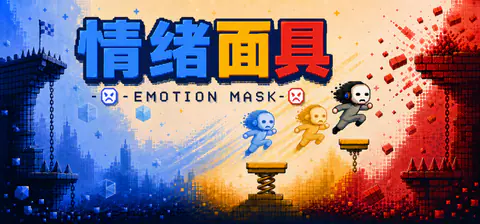
Emotion Mask is a 2D platformer-puzzle game centered on emotion switching and a long-term project I have continued from a solo 48-hour Global Game Jam 2026 prototype. The player controls a boy wearing a blank mask and switches between Calm, Joy, and Anger. Each state changes movement, world readability, and obstacle interaction.
The project was published on TapTap with a 9.4 rating and received nearly one hundred in-person plays at the Shuguang Youji roadshow in Chengdu. I have continued work on character 3C, content, controller adaptation, and release configuration, and submitted both the Steam Early Access main game and a standalone demo for review. Submission is reported as submission, not as a completed Steam launch.
Timeline
- Global Game Jam 2026: completed the core mechanic, level, and playable prototype in 48 hours.
- TapTap: prepared the page and build and published the game; the current store rating is 9.4.
- Shuguang Youji, Chengdu: ran nearly one hundred in-person plays and observed tutorial, control, and comprehension issues.
- Continued development: improved character 3C, content, controller prompts, gamepad support, and level tools.
- Steam review: submitted both the Early Access main game and standalone demo and handled store assets, launch configuration, and review feedback.
- Platform systems: cloud saves, controller support, and Workshop work have local implementation or test evidence, while production Steam end-to-end verification remains a separate milestone.
Core Gameplay
The mask works as a bridge between character ability and level solution. Each emotion is tied to a distinct gameplay function rather than being a simple visual change.
- Calm reveals hidden paths and clues, helping the player understand the level.
- Joy improves mobility with higher, lighter jumps.
- Anger grants destructive force and dash-based obstacle breaking.
The level design encourages players to keep switching states. The strongest solution is rarely staying in one mode; it is choosing the right emotional state for the current problem.
Screenshots and Mechanics
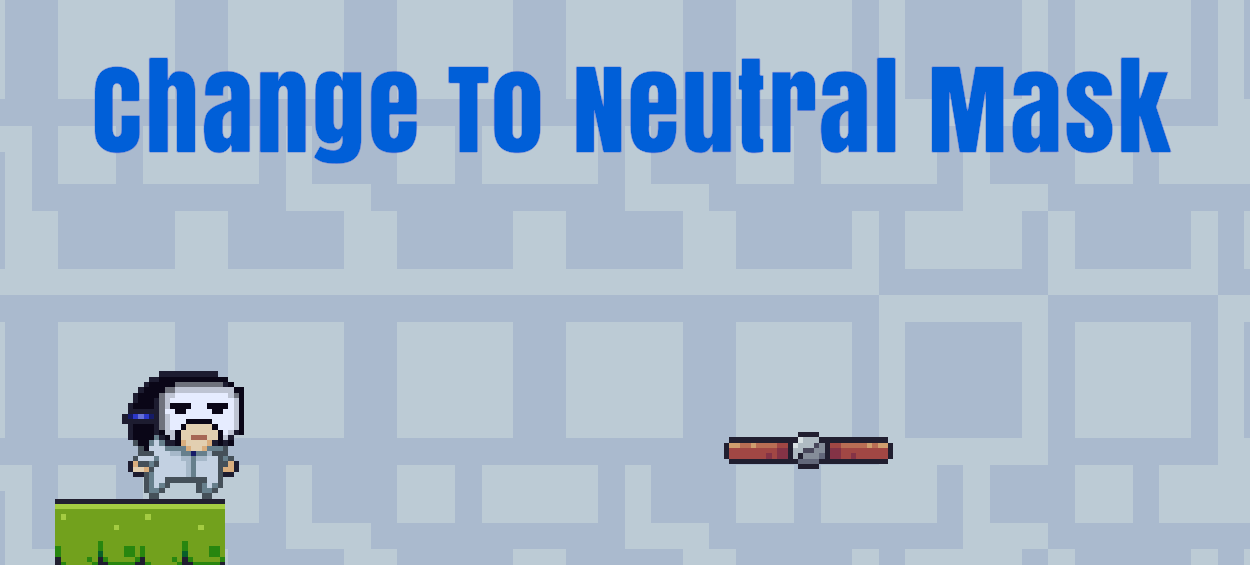
In the Calm state, certain hidden platforms become visible, allowing the player to observe the level and choose a safer route.
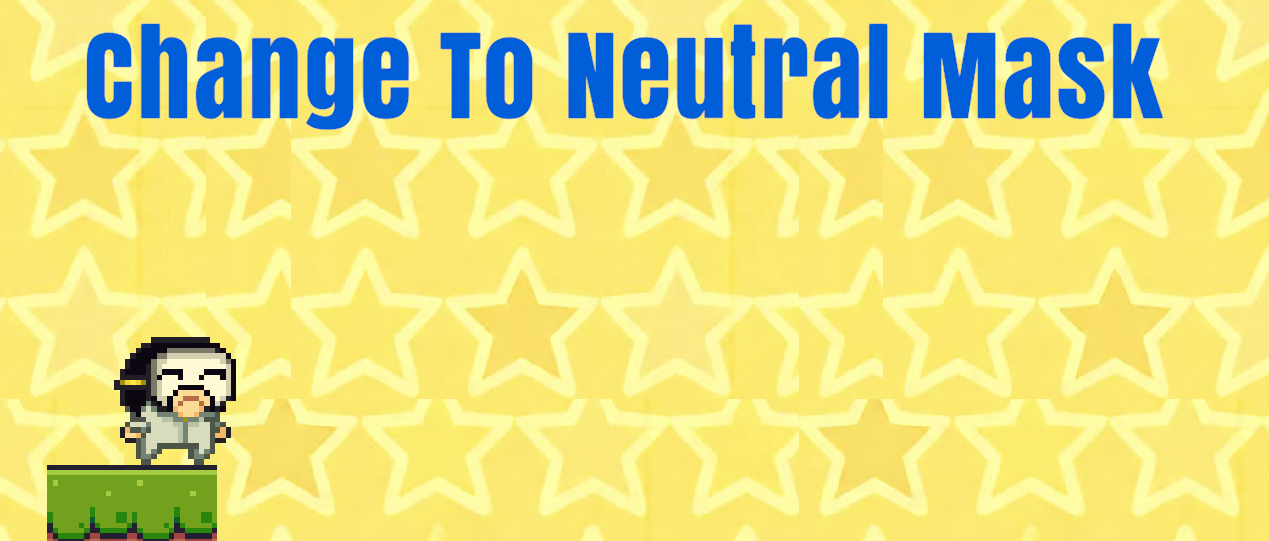
After switching to Joy, the same platform is no longer visible, but the character gains faster movement. This contrast shows the core idea: masks are not simple buffs; they change how the level can be read.
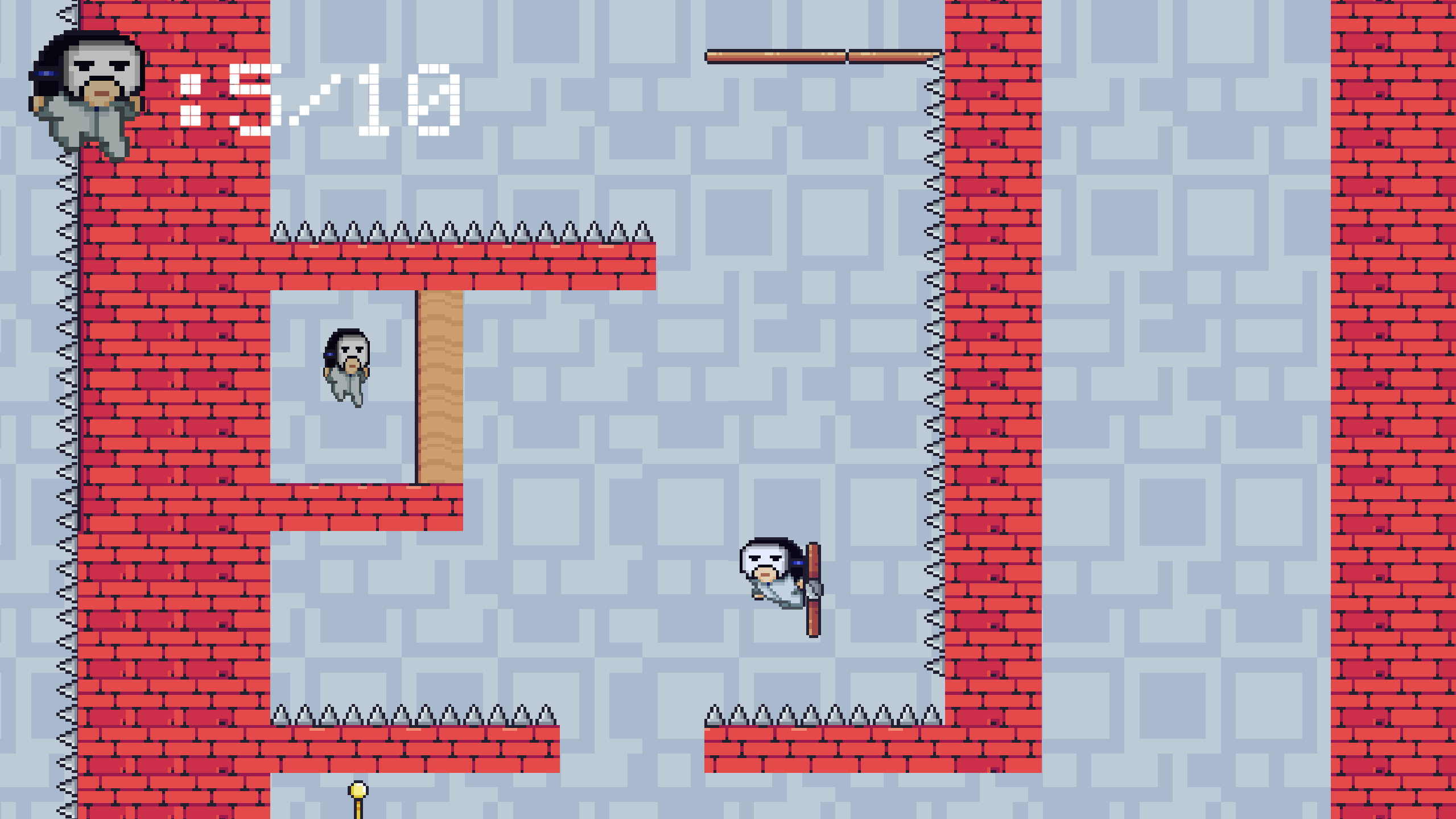
The level combines spikes, walls, moving platforms, and mask states so the player keeps switching between execution and decision-making.
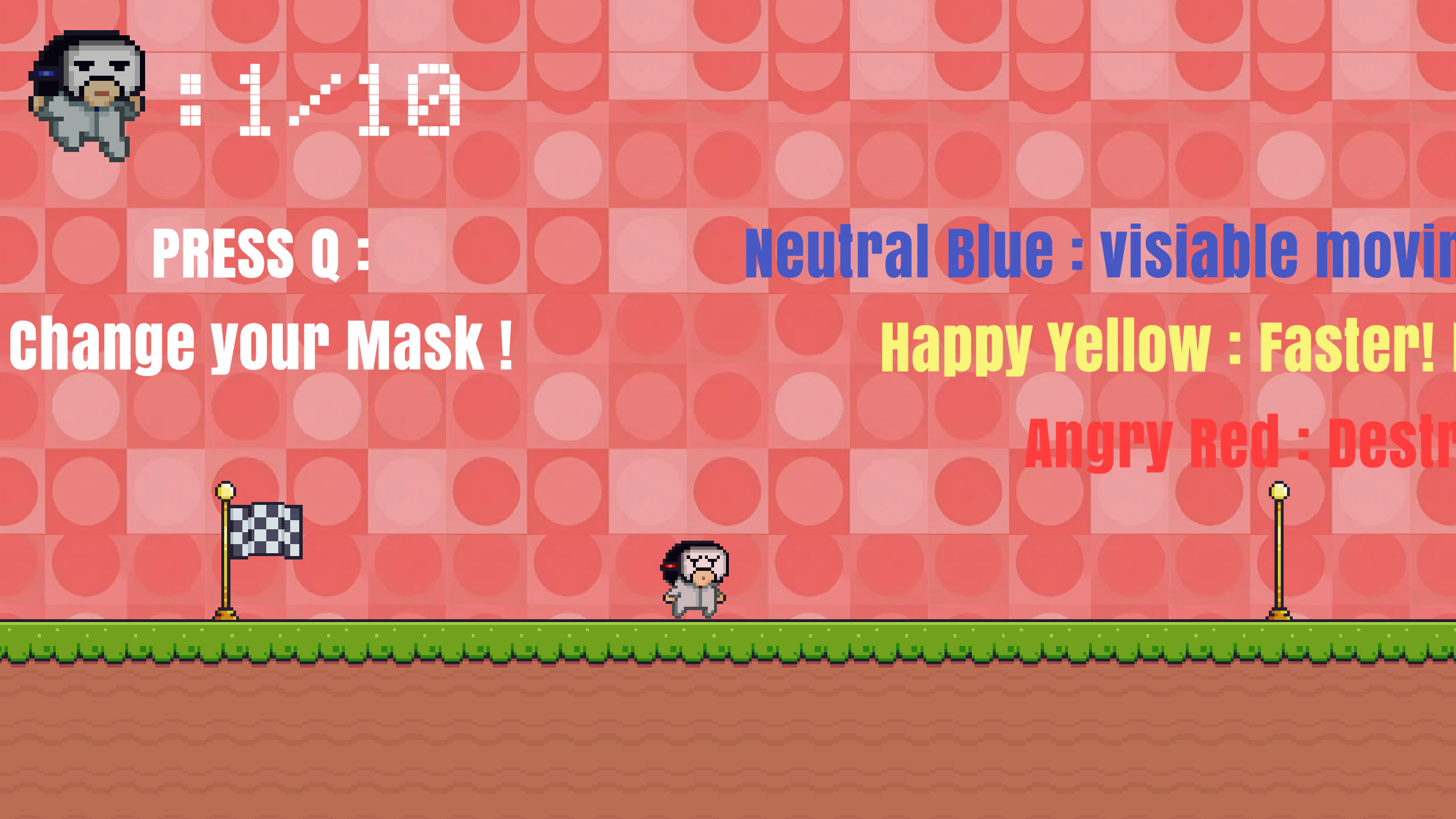
The tutorial area explains the three mask abilities: Calm reveals moving platforms, Joy is faster, and Anger can destroy obstacles.
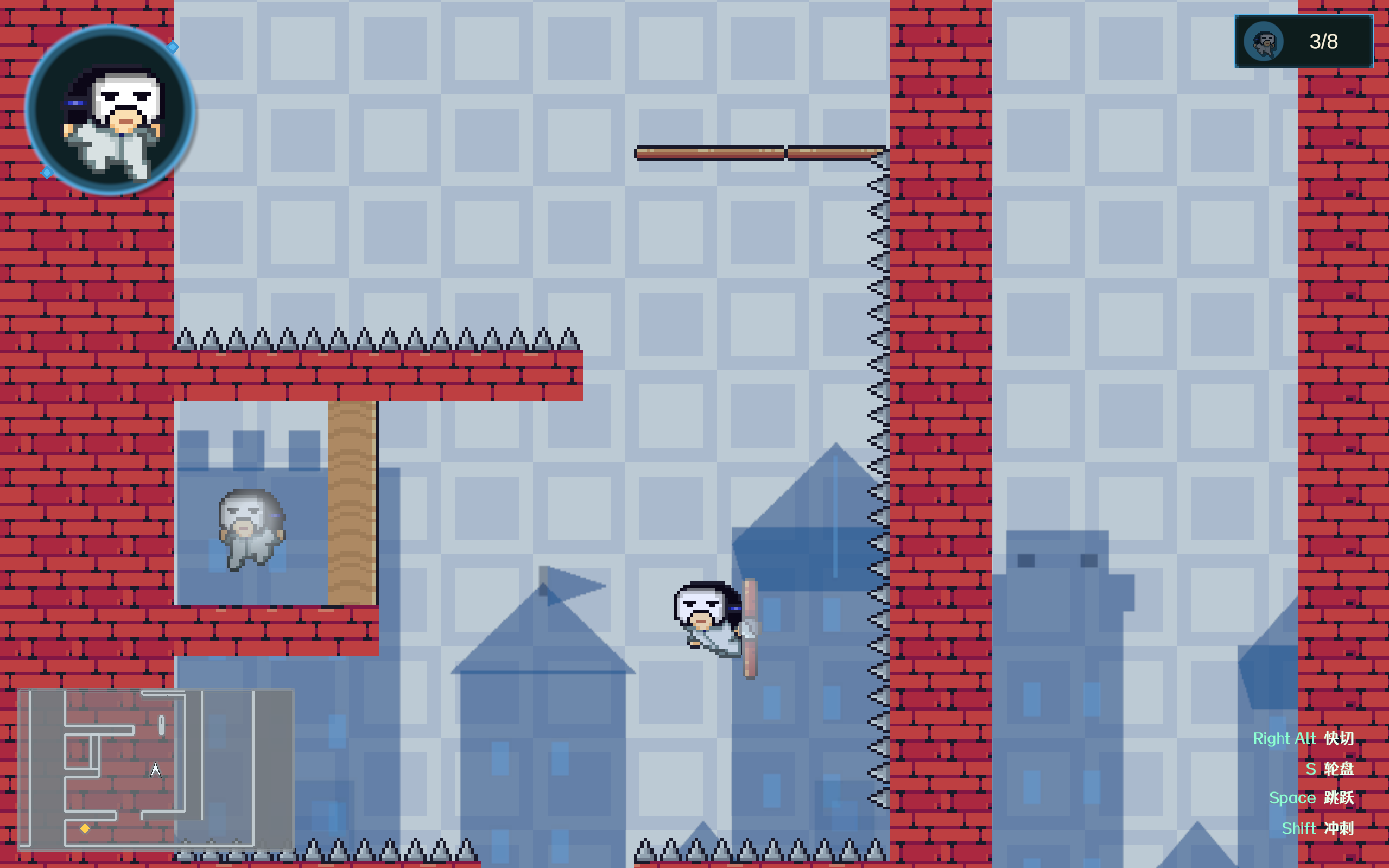
The ongoing build includes a minimap, controller prompts, and multi-level flow. This image demonstrates the local build state, not complete production verification of every Steam platform feature.
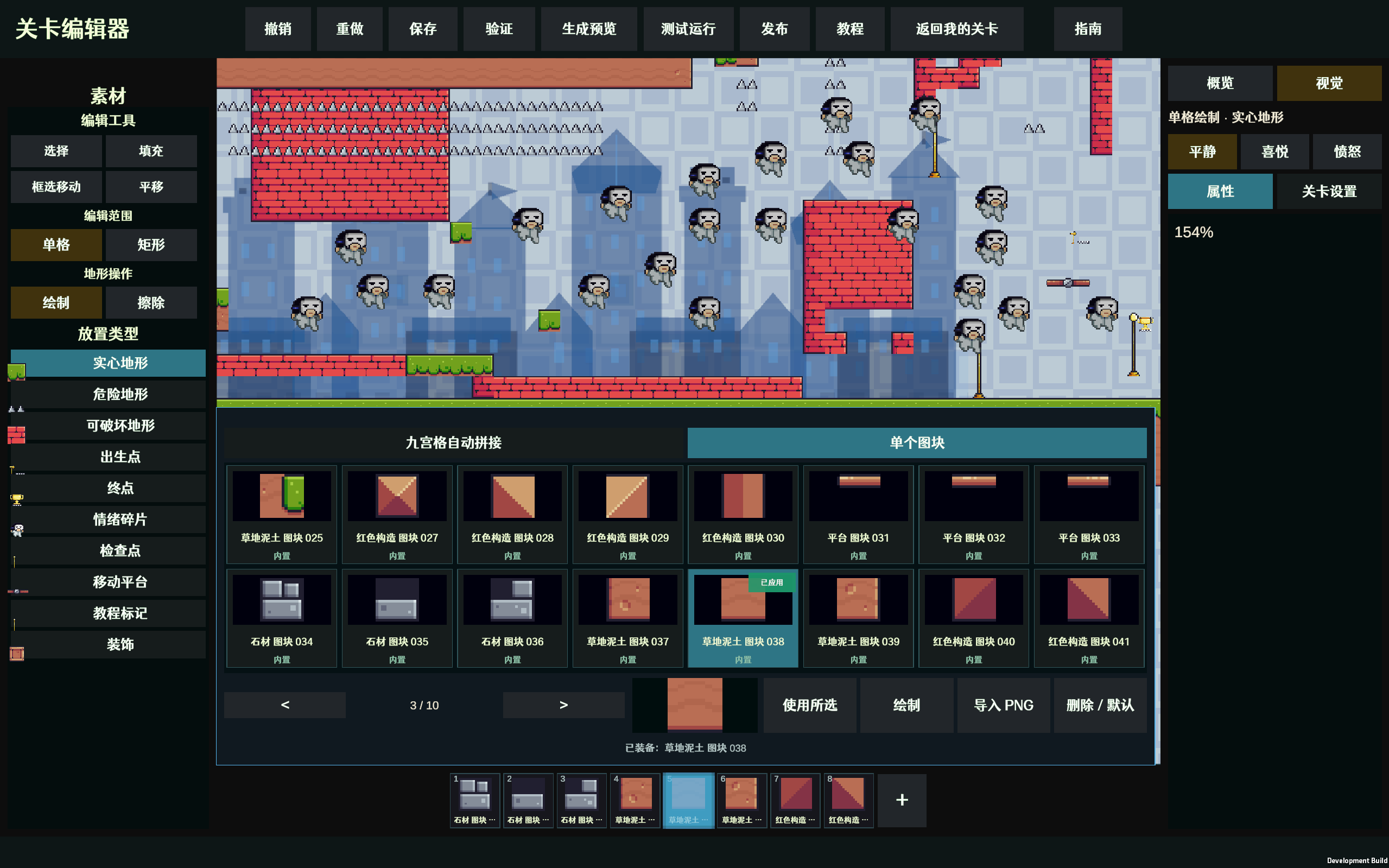
The level editor organizes reusable scenes and level data so later content work requires less repeated setup.
Theme
The game explores the idea that emotions are not mistakes to be removed, but different ways of responding to the world. Calm, Joy, and Anger each have value: observation, movement, and breakthrough.
In that sense, the mask is both a mechanic and a metaphor. It turns inner emotional shifts into readable rules, actions, failures, and retries.
My Role
- Independently handled game design, programming, level design, pixel-character and animation-frame drawing, audio integration, build release, and store-page preparation.
- Used AI-assisted music generation, then personally selected, adjusted, and integrated the material rather than presenting it as fully human-composed music.
- Designed three emotional mask states and connected state switching to movement speed, jumping, air jumps, wall jumps, dash count, character visuals, backgrounds, and music.
- Built the core rule that each state changes how the level is read: Calm reveals hidden platforms, Joy improves mobility, and Anger enables dash-based obstacle breaking.
- Completed the full 48-hour loop: start menu, level flow, checkpoints, death and respawn, shard collection, timer settlement, and victory screen.
- In the later local Unity project, organized the build scene flow as
StartMenu -> 001 -> 002 -> 003and added per-level leaderboard timing, a level-complete menu, volume control, and trigger-driven typewriter prompts. - Prepared the TapTap page, Global Game Jam page, Bilibili demo, playable package, descriptions, tags, platform information, and presentation material.
Technical Implementation
The game was built in Unity with C#, with the main focus on responsive character control, state events, and fast level-feedback loops. I explain the project through five layers: player control, emotion state, level feedback, death/respawn, and release flow. This structure reflects the real core of Emotion Mask: the masks are not three skins, but a state machine that changes how the level can be read and solved.
MaskControlacts as the emotion state center. It maintainsNeutral,Happy, andAngry, then notifies platform, music, and feedback systems throughOnEmotionChangedEvent.- Each emotion owns an
EmotionStatsset that writes intoPlayerMove,PlayerJump, andPlayerDash, changing movement speed, jump force, air jumps, wall jumps, dash speed, cooldown, and air-dash count. - Calm-state platforms are controlled through
neutralPlatformsandEmotionalPlatform, which toggle renderer and collider state. When leaving Calm, the script also detaches the player from hidden platforms to avoid carrying the player with a disabled object. - Anger connects to the dash and breakable-wall systems:
PlayerDashchecks whether the current emotion isAngry, andHurtcheckonly callsBreakableTilemapor obstacle animation when the player is both angry and dashing. - Death and respawn are linked through
Hurtcheck,CheckPoint, andGetRespawn: traps trigger death feedback and then return the player to the latest checkpoint instead of breaking the level flow. - Shard collection notifies
GameManager; once the target count is reached, the game stops the timer, records leaderboard data, locks player control, switches to ending music, and shows the win flow.
System Structure
The scripts are mainly organized into five modules:
- Player control:
PlayerMove,PlayerJump,PlayerDash,GroundCheck, andWallCheckfor platforming feel and dash behavior. - Mask switching and presentation:
MaskControl,MaskAnimator,EmotionalPlatform, andMusicManagerfor state, visuals, platform visibility, and music switching. - Level interaction:
CheckPoint,GetRespawn,Hurtcheck,TrapCheck,PlatformMove,BreakableTilemap, andCollectibleRotationfor failure, respawn, moving platforms, breakable obstacles, and shard feedback. - Flow and settlement:
GameManager,GameTimer,LevelLeaderboard,LevelCompleteMenu, andPlayerCheckpointsfor shard goals, final time, level ranking, level chaining, and input locking. - Menu and UI:
StartMenu,GamingMenu,SceneLoadButton,MapSelector, and basic UI animation for start, pause, level select, restart, and return flow.
As a flow, the key is not having many states, but making every state return to level feedback:
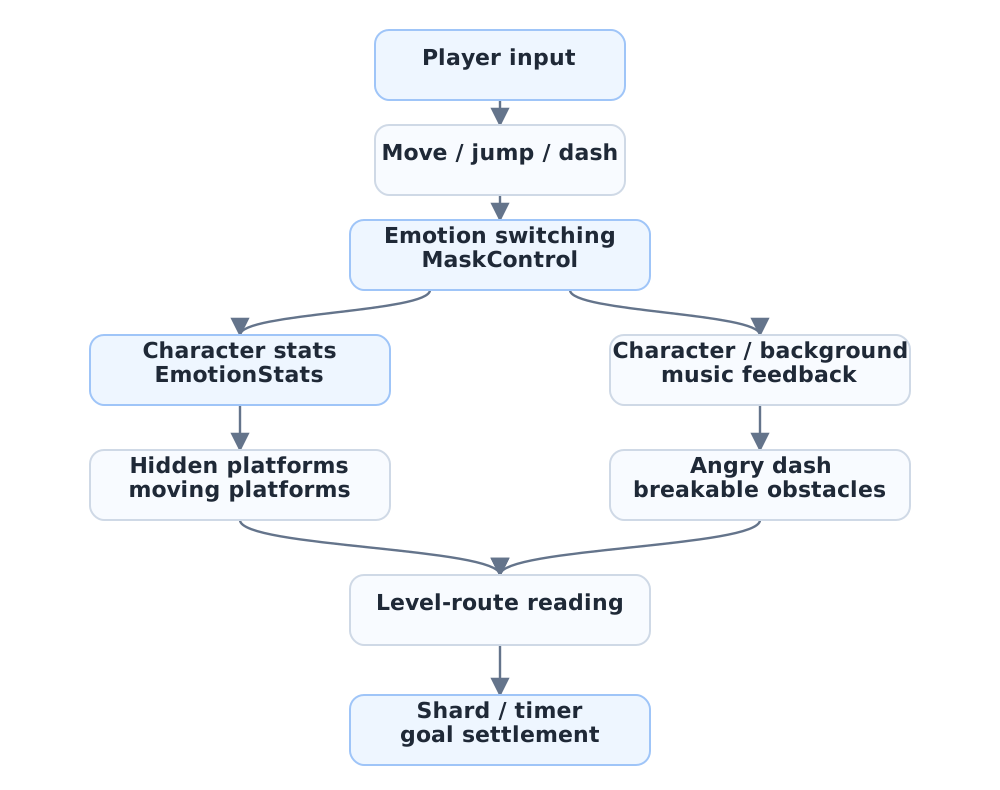
The core data flow is: the player switches masks, MaskControl updates state and character parameters, state events drive platform visibility and music, and player movement/jumping/dashing enters level interaction. Traps go through the respawn chain, angry dashes go through the breaking chain, and shard collection goes through the settlement chain. This kept the 48-hour implementation light while making every feedback path point back to emotion switching.
The main engineering tradeoff was reliability over spectacle. Before hidden platforms are disabled, the player is detached from them; traps return the player to the latest checkpoint; and the victory sequence locks player control while switching to ending music. Those details are quiet, but they made the jam build much easier for strangers to finish.
Release
Emotion Mask was published on TapTap and submitted to Global Game Jam 2026. Both the Steam Early Access main game and standalone demo have also been submitted for review. TapTap and GGJ are public evidence; the Steam state is described as submitted rather than launched.
This project helped me understand that finishing a prototype is only one part of showing a game. Screenshots, cover art, tags, store copy, download links, and external pages all affect how the work is perceived. The later local multi-level flow, leaderboard, and UI support systems are iteration foundations, but they still need manual Play Mode and build verification before being described as part of a public release.