Left Jun / Limenauts
About Left Jun
Left Jun's project portfolio, currently prioritizing game project management, AI workflows, and independent-game delivery while retaining hands-on gameplay, web, and embedded engineering experience.
I publish work as Left Jun. In resumes, competition material, and recruiting contexts, I use my legal name, Zuo Hanjun.
Limenauts is the personal and team creation brand I initiated and continue to use. It carries game jams, playable prototypes, team projects, and long-term development records. It is not a separate organization detached from me, but my creator identity for organizing collaboration, finishing work, and exploring game expression through implementation.
I study Communication Engineering at Sichuan University and expect to graduate in June 2029. For current recruiting and interview contexts, I place game project management, AI applications, and development collaboration earlier in the reading order. This does not replace gameplay or engineering ownership; it connects hands-on development, team coordination, user research, and product release into one clearer path.
Selected Work
Representative Projects
Current Positioning
I am interested in game project-management and AI-application work that requires both development context and cross-discipline delivery. I can discuss task boundaries with design, programming, art, QA, and platform-release contributors while owning requirement breakdown, owner alignment, version integration, risk follow-up, and delivery.
This positioning comes from work rather than a job title. I have independently built Unity games and pixel art, led cross-university game-jam teams, and coordinated research and delivery work. Engineering experience helps me identify dependencies and testing risk, while independent-game work keeps scope, completion quality, and public release concrete.
Guanghe Campus Co-creation Program
AI-Assisted Game Project Management
An individual study on PM handover, conflict decisions, launch review, and roadmap planning. The full record and mentor evaluation require the shared access code.
User Research on AI Game-Creation Tools
User research on AI game-creation tools covering the H5 and backend flow, report integration, and final presentation. Full research material and deliverables require the shared access code.
Action-Game Combat and IP Gameplay Translation
Research on action-game attack-defense, resource exchange, version balance, and IP gameplay translation. The complete document requires the shared access code.
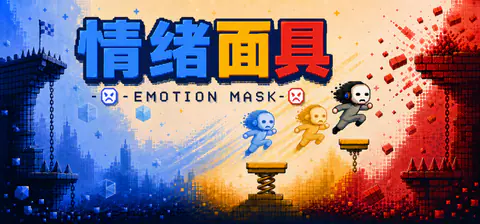
Emotion Mask: From Prototype to Release Preparation
Emotion Mask began as a solo 48-hour Global Game Jam prototype, was later published on TapTap with a 9.4 rating, and reached nearly one hundred in-person plays at the Shuguang Youji roadshow in Chengdu. I am continuing work on character 3C, content, controller adaptation, store assets, and review feedback. Both the main game and a standalone demo have been submitted for Steam review.
I drew the pixel characters and animation frames myself. The background music used AI-assisted generation, after which I selected, adjusted, and integrated the material. Cloud saves, controller support, and Workshop work are described according to the distinction between local implementation, submitted content, and production Steam verification.
Project Management and Collaboration
- Confirm the goal, user, and non-removable core experience before breaking down tasks, owners, dependencies, and acceptance conditions.
- Reduce non-core scope in time-boxed work so the playable loop, test milestone, and delivery remain protected.
- Use AI for structure, implementation support, checks, and material processing while retaining human constraints, testing, selection, and responsibility.
- Keep data, feature state, and contribution boundaries clear instead of presenting plans, local implementations, or team outcomes as publicly validated individual results.
Technical Background
- Unity / C#: character control, state machines, level interaction, UI, saves, tooling, builds, and release work.
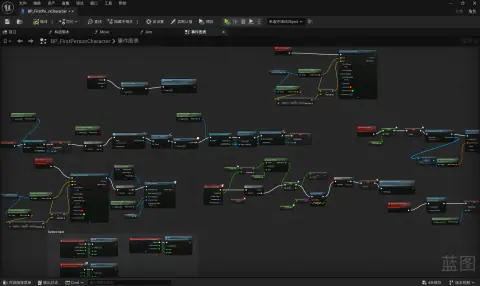
- Unreal Engine 5: Blueprint, Replication, Listen Server, UMG, basic AI, and multiplayer gameplay flow.
- C / C++ and Qt: object-oriented design, local desktop applications, JSON storage, and build scripts.
- STM32: sensors, wireless communication, servo and motor control, and hardware-software integration.
- Web: Astro, Next.js, responsive interfaces, content systems, and static-site deployment.
At the Sichuan University Water Star Model Boat Competition (Spring 2026), I entered as the only solo team, independently completed the STM32 controller, onboard receiver, PCB, fabrication, and full-system integration, and placed 9th among 72 professional-division teams. It remains concrete evidence of hands-on dependency management, testing, and delivery across hardware and software.
These skills are the basis for understanding development collaboration and solving implementation problems directly. I continue writing code, designing gameplay, drawing pixel animation, and maintaining personal products rather than rewriting technical work as process management alone.
Current Focus
I am continuing Steam release preparation for Emotion Mask, publishing sanitized Guanghe study material, and strengthening UE5 multiplayer, gameplay engineering, and AI-assisted production workflows. This site remains the long-term Left Jun / Limenauts project archive, recording what is complete, who owned it, and what still needs validation.
Start a conversation
Contact
Project, feedback, collaboration, and game client / gameplay contact information for Left Jun.